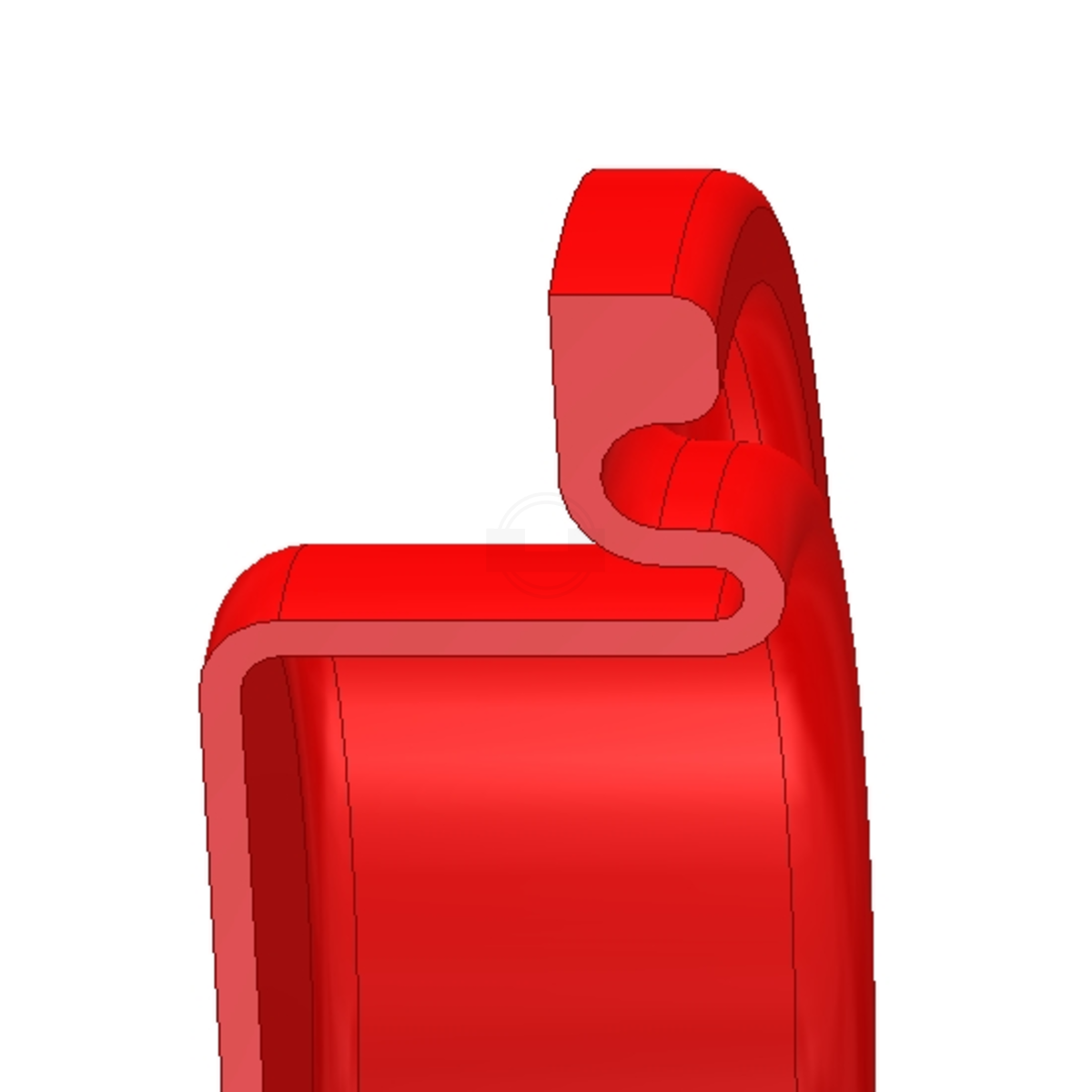
Diaphragms Rolling Diaphragm
Rolling diaphragms are highly flexible, thin-walled diaphragms that are used primarily in applications requiring long stroke lengths. Thanks to their special geometry, the diaphragm can unroll during movement, enabling flexible and virtually frictionless motion transmission.
By design, rolling diaphragms are equipped with fabric reinforcement on the side facing away from the pressure.
What are the benefits of rolling diaphragms?
- Long stroke lengths – Rolling diaphragms enable large movement ranges in relation to their diaphragm diameter, making them particularly suitable for applications requiring long strokes.
- Nearly constant inherent resistance – Due to the rolling movement, the diaphragm's inherent resistance remains largely constant throughout the stroke. This supports uniform transmission of movement.
- Constant effective area – The effective area remains largely constant throughout the entire stroke. This enables defined and reproducible behavior during pressure transmission.
Rolling Diaphragm RMG
Where are rolling diaphragms used?
Due to their specific movement characteristics, rolling diaphragms are primarily used in control and regulation technology.
Typical applications include:
- Measuring instruments
- Display instruments
- Control devices
- Other applications requiring long strokes
Designs and materials
Rolling diaphragms are manufactured to customer specifications and can therefore be adapted to different geometries and installation conditions.
As standard, NBR diaphragms with fabric reinforcement are used. Depending on the requirements, designs made from other elastomer materials such as FKM, EPDM or VMQ are also available, as well as special grades for higher temperature or pressure requirements.
The applicable temperature range and permissible media pressure depend on the material used and the respective design.
Technology - General sealing topics, special constructions
Project Management